
Astrology and Health: What Does Your Sign Say?
A reflective look at traditional associations between zodiac signs and parts of the body.
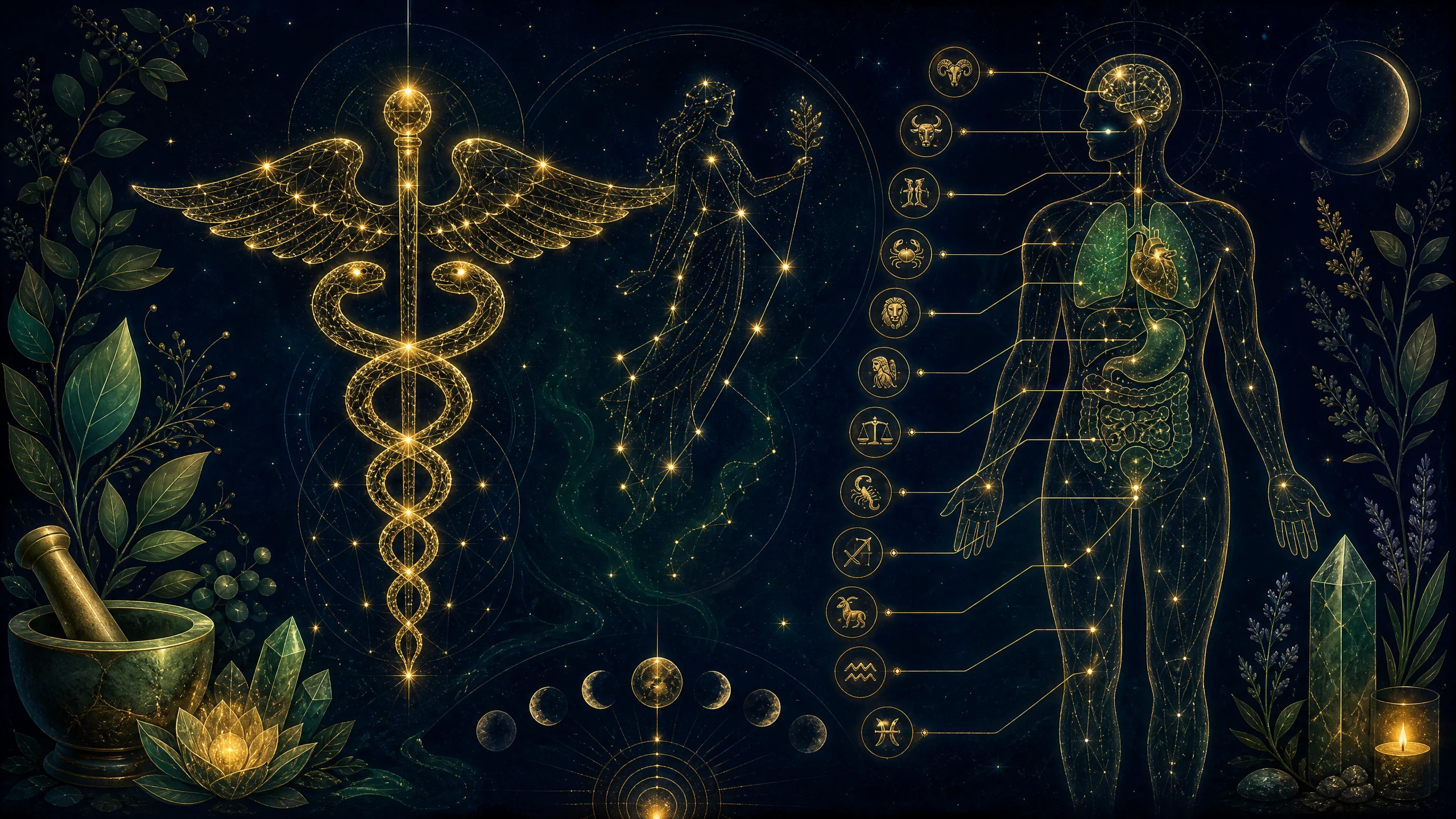
Medical astrology — the branch of astrology that links zodiac signs to the body — is one of the oldest and most enduring applications of astrological symbolism. For centuries, physicians used it to guide diagnosis and treatment. Today, it is understood as a reflective tool rather than a medical system, but its symbolic associations remain a fascinating lens for thinking about wellbeing and self-care.
The History of Medical Astrology
Medical astrology has roots in ancient Mesopotamia and flourished in the Hellenistic world. The Greek physician Hippocrates — often called the father of medicine — is said to have considered astrological knowledge essential for any physician. Galen, the most influential medical writer of antiquity, incorporated astrological timing into his prescriptions.
During the medieval and Renaissance periods, medical astrology was taught at European universities alongside anatomy and pharmacology. Physicians would cast a chart for the moment a patient fell ill (called a decumbiture chart) to guide treatment. The invention of the printing press spread astrological almanacs — which included health advice keyed to planetary positions — to a mass audience for the first time.
The Scientific Revolution gradually separated medicine from astrology, and by the 18th century, medical astrology had lost its academic standing. Today it is practised by some traditional and Hellenistic astrologers, but it is not part of mainstream healthcare in any country.
The Zodiac and the Body: Traditional Correspondences
The most widely known aspect of medical astrology is the assignment of each zodiac sign to a body part or system. The traditional correspondences, running from head to toe, are:
- Aries — the head, face, and brain
- Taurus — the throat, neck, and thyroid
- Gemini — the lungs, arms, hands, and nervous system
- Cancer — the stomach, breasts, and digestive system
- Leo — the heart, spine, and upper back
- Virgo — the intestines, digestive system, and pancreas
- Libra — the kidneys, lower back, and adrenal glands
- Scorpio — the reproductive organs, bladder, and colon
- Sagittarius — the hips, thighs, and liver
- Capricorn — the bones, joints, knees, and skin
- Aquarius — the circulatory system, ankles, and calves
- Pisces — the feet, lymphatic system, and immune system
These correspondences are symbolic, not anatomical. They are best understood as metaphors for areas of life where a sign may benefit from extra mindfulness — not as medical predictions. Always consult a qualified healthcare professional for any health concern.
Elemental Temperaments and Wellbeing
Beyond the sign-body correspondences, medical astrology also uses the four elements to describe constitutional types — broad temperamental patterns that suggest different approaches to health and self-care.
Fire signs (Aries, Leo, Sagittarius)
Fire signs tend toward high energy, enthusiasm, and a tendency to push past their limits. Traditional medical astrology associated fire with a "choleric" temperament — prone to inflammation, fever, and burnout when the fire burns too hot. Wellbeing practices that help fire signs include regular physical exercise to channel their energy, adequate rest to prevent exhaustion, and mindfulness practices to cool impulsive reactions.
Earth signs (Taurus, Virgo, Capricorn)
Earth signs are constitutionally stable and resilient, but they can accumulate tension in the body through overwork, worry, or resistance to change. Traditional associations include digestive sensitivity (Virgo), joint and bone issues (Capricorn), and throat tension (Taurus). Grounding practices — time in nature, regular meals, bodywork — tend to be particularly restorative for earth signs.
Air signs (Gemini, Libra, Aquarius)
Air signs live primarily in the mind and can struggle to stay connected to the body. Traditional associations include nervous system sensitivity (Gemini), adrenal fatigue from chronic indecision (Libra), and circulatory issues (Aquarius). Air signs benefit from practices that anchor them in the physical: breathwork, yoga, and regular sleep schedules.
Water signs (Cancer, Scorpio, Pisces)
Water signs are highly sensitive to their emotional environment, and unprocessed emotions can manifest as physical symptoms. Traditional associations include digestive issues linked to anxiety (Cancer), reproductive health (Scorpio), and immune sensitivity (Pisces). Water signs benefit from emotional boundaries, restorative rest, and practices that help them process and release accumulated feelings.
Astrology and Mental Health
Contemporary astrologers are increasingly thoughtful about the intersection of astrology and mental health. Some clients find that astrological frameworks — particularly understanding their Moon sign and its emotional needs — help them articulate experiences that are otherwise hard to name. Others use planetary transits as a timing tool: understanding that a difficult Saturn transit, for example, often coincides with periods of restriction and hard work can help normalise the experience rather than pathologise it.
It is important to be clear: astrology is not a substitute for mental health care. If you are struggling with your mental health, please seek support from a qualified professional. Astrology can be a complementary tool for self-understanding, but it is not therapy.
Frequently Asked Questions
Does my zodiac sign predict health problems?
No. Astrology does not predict illness. The traditional sign-body correspondences are symbolic associations, not medical diagnoses. Health outcomes are determined by genetics, lifestyle, environment, and access to healthcare — not by birth date.
Can astrology help with wellness planning?
Some people find that astrological frameworks help them reflect on their wellbeing patterns — for example, noticing that they tend to overextend during certain planetary transits, or that their elemental temperament suggests particular self-care approaches. Used thoughtfully, astrology can be one input in a broader wellness practice.
What is the healthiest zodiac sign?
There is no "healthiest" zodiac sign. Every sign has its traditional strengths and vulnerabilities. Health is a complex outcome of many factors, none of which are determined by astrology.
What is the connection between the Moon and health in astrology?
The Moon is traditionally associated with the body's rhythms, fluids, and instinctive physical responses. In medical astrology, the Moon sign is thought to describe constitutional sensitivity — the areas of the body and the kinds of experiences that affect you most deeply at a physical level. The Moon's cycle (approximately 29.5 days) has also been linked to biological rhythms, and some traditional astrologers time medical procedures and health interventions according to the lunar cycle. These associations are symbolic rather than medical, but they remain a rich area of astrological inquiry.
Is there a connection between astrology and sleep?
Some astrologers associate sleep quality and patterns with the Moon sign and the 12th house — the house of solitude, rest, and the unconscious. A strongly placed Neptune or a prominent 12th house can indicate a vivid dream life and a need for extended periods of rest and withdrawal. Practically, many people find that tracking the lunar cycle helps them understand their own energy rhythms: the days around the new moon often feel more inward and restful, while the full moon can bring heightened energy and, for some, disrupted sleep. These are observational patterns rather than medical facts, but they can be a useful starting point for self-awareness around sleep and recovery.
Conclusion
Medical astrology is one of the oldest and most symbolically rich branches of the tradition. While it is not a medical system, its correspondences between signs, elements, and the body offer a thoughtful framework for self-reflection on health and wellbeing. Some astrologers also use planetary transits to understand health cycles: Saturn transits are traditionally associated with periods of physical consolidation and the need for greater discipline around health habits, while Jupiter transits are associated with vitality and recovery. These interpretations are symbolic and general — for any health concern, always consult a qualified healthcare professional. Explore the twelve zodiac sign profiles on Orveluna, or read about astrology and balance for a broader perspective on finding equilibrium through an astrological lens.